
Frac Franche-Comté
Since 2013, the Frac Franche-Comté has been located in the Cité des Arts in Besançon, a culture centre also home to the CRR Regional Conservatoire music academy. The first building to be commissioned by the French state from Kengo Kuma, the Cité des Arts reflects the surrounding landscape while remaining rooted in the city’s history. Set on the banks of the river Doubs and surrounded by bastions that bear witness to the age of the great French engineer Vauban’s fortifications, the building includes a refurbished brick section, a relic of the old river port.
It is here that the Frac holds exhibitions based on its collection, as well as a multidisciplinary cultural agenda. A wide array of events are on offer to visitors, including meetings with artists, public lectures, performances, video nights, concerts and dance.

‘Centrifugal’ in nature, the Frac collection is disseminated throughout the region and is the subject of numerous loans in France and abroad. Since 2015, a truck converted into an art space known as ‘Le Satellite’ has acted as a travelling exhibition, taking art to those who are far from cultural centres.
In line with its aim to raise awareness of contemporary art, the Frac places particular emphasis on guiding the public through their discovery of the works. A range of resources are available for visitors, including exhibition booklets, booklets adapted to disabled visitors, activity booklets, FracBox for children, as well as information sheets in Braille and hands-on models. Cultural outreach is seen as an open and interactive conversation and is tailored to suit each individual.

Some sense of perseverance, of resistance
Since 2006, the Frac Franche-Comté collection has revolved around the notion of time. In 2017, the Frac acquired a work by Elisabeth S. Clark entitled ‘A Spark Kept Alight’; flickering across the space above our heads is a subtle, fleeting spark. This work bears some resemblance to György Ligeti’s ‘Poème symphonique pour 100 métronomes’, presented by the Frac in 2014. Anyone who attended this concert will remember its anthropomorphic dimension. Each metronome kept us on the edge of our seats. Each was like a human heart that seemed to be insisting, striving to be the last one to beat until there was complete silence. Like Ligeti’s work, Elisabeth S. Clark’s offering conjures up for me some sense of perseverance, of resistance.
And resistance was also the topic of the exhibition ‘Survivre ne suffit pas’ (‘Survival is insufficient’). Held at the Frac in 2019, it was a mixture of works from our collection and political and poetic overtones. Its title was taken from Station Eleven by Emily St-John Mandel. Published in 2014, this futuristic novel explored the importance of Culture for humankind, particularly in times of crisis, for it is through Culture that man is able to maintain or recover his humanity.
In 1966, British artist Peter Hutchinson wrote a short piece entitled ‘A Review from the Year 2066’. In it he described an age without artists and with no need for art. Yet for the author this was only possible because it was a fully developed utopia, a world devoid of injustice, poverty, war, borders, pandemics and climate or environmental threats. Until then…
Sylvie Zavatta is an art historian and exhibition curator. She was director of the Frac Basse-Normandie from 1986 to 2001, then of ESBA Mans from 2001 to 2005. She has been director of the Frac Franche-Comté since 2005.
On-site exhibition
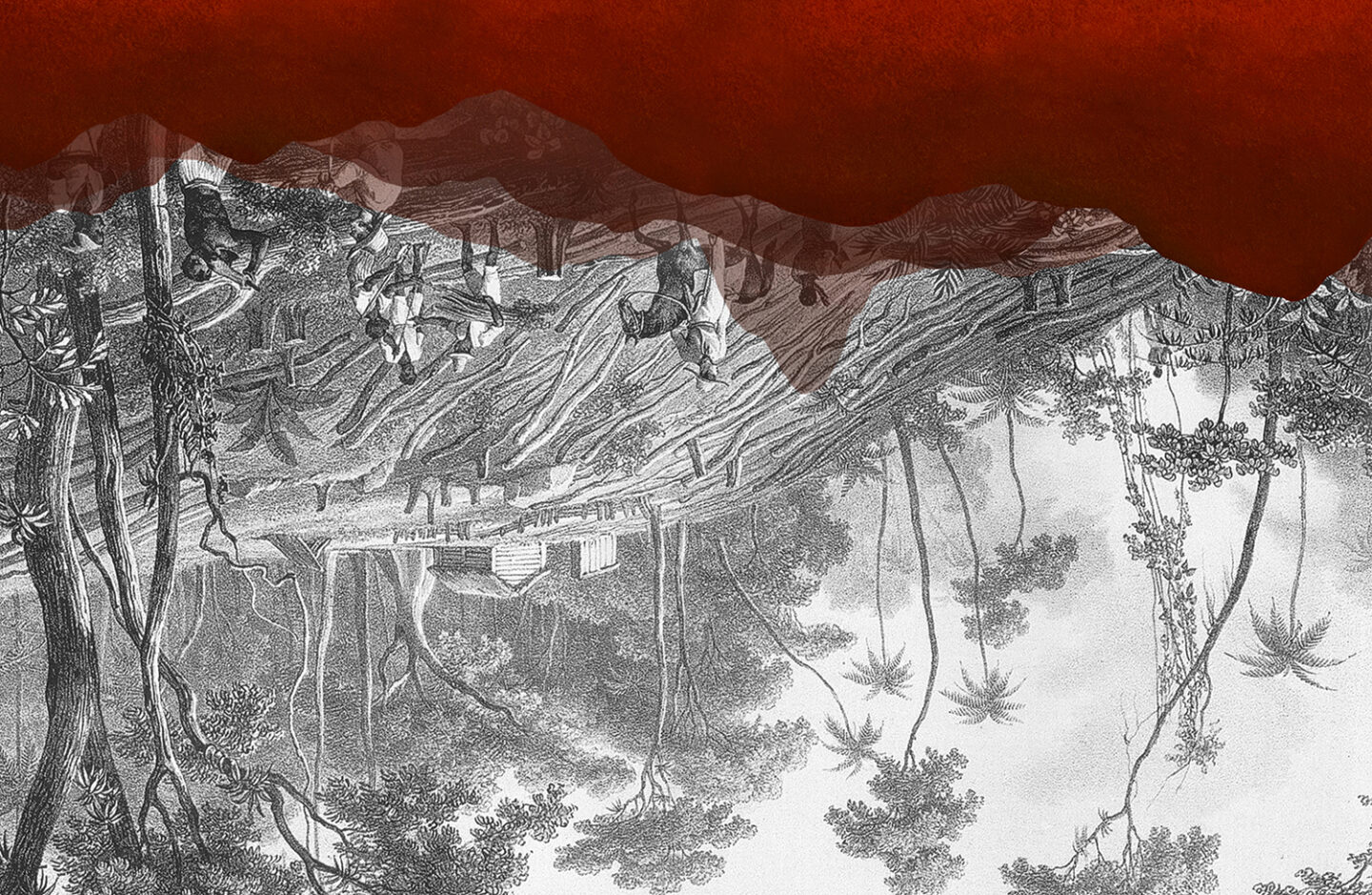
Nina Laisné, un monde renversé
2 Passage des Arts 25000 Besançon
01.03.27
Le Frac Franche-Comté consacre une première exposition monographique d’envergure à Nina Laisné dont l’œuvre transdisciplinaire se déploie dans le champ des arts visuels, de la musique, du spectacle vivant et du cinéma.
Si Nina Laisné est aujourd’hui reconnue pour ses créations scéniques marquantes – notamment Romances inciertos, un autre Orlando (2017), conçue avec le chorégraphe et danseur François Chaignaud, ou l’opéra onirique Arca ostinata (2021) imaginé pour le théorbiste Daniel Zapico – elle poursuit parallèlement une œuvre majeure dans le champ des arts visuels dont témoignent les pièces conservées par le Frac et l’exposition présentée aujourd’hui où figurent de nombreuses pièces inédites.
Chez Nina Laisné, les œuvres scéniques et les œuvres plastiques sont intrinsèquement liées : elle y célèbre également les métamorphoses, les identités hybrides et les confluences musicales. L’artiste insuffle à ses productions plastiques une esthétique théâtrale, tandis qu’elle imagine pour la scène des compositions picturales. La porosité est telle que l’on retrouve au cœur de l’exposition une œuvre monumentale issue d’Arca ostinata : « un théorbe qui se rêve édifice (…) orné de bestiaires fantastiques, de chimères et d’oiseaux empruntés à l’ornementation baroque ».1
Dans un mouvement de va-et-vient permanent, les recherches plastiques nourrissent ainsi les performances scéniques et inversement. Le dialogue entre image, musique et chant est omniprésent, irrigué par des traditions populaires, des récits oraux ou des fables concernant des êtres au genre fluide ou en voie de mutation animale. Ces figures ambiguës, dont l’ancestralité se révèle ici évidente, rejoignent des préoccupations très actuelles relatives à l’identité et à la visibilité des minorités.
La démarche de Nina Laisné s’enracine dans une archéologie rigoureuse de l’archive : partitions oubliées du XVIIe siècle, récits coloniaux, iconographies marginales et folklores ruraux. Elle s’emploie à dévoiler les failles des représentations et discours officiels et hégémoniques pour construire des contre-récits. Ainsi, dans les installations Vou esperar a lua voltar (2026) et Portulanos virados (2026), elle met en lumière l’histoire d’une exploitation à la fois ethnocide et écocide au Brésil : celle du bois de Pernambouc, pillé dès le XVIe siècle par les colons français pour ses qualités tinctoriales et la fabrication d’archets. Ailleurs, elle explore avec l’autrice Célia Houdart les multiples récits ibériques autour de la « femme-ours » (A Mulher ursa, 2024-2026), interrogeant notre rapport à l’altérité.
Ses recherches, qui s’étendent souvent sur plusieurs années, se métamorphosent en propositions immersives d’une grande puissance poétique. Le visiteur est baigné dans un univers visuel hanté par la peinture de la Renaissance, où la lumière – traitée par le prisme des ultraviolets dans Frati uccelli (2023) – révèle ce que l’œil nu ne peut percevoir. La musique et le chant, issus des répertoires ibérique, brésilien ou italien, constituent la matière première et vibrante de chaque pièce. Ils questionnent la possibilité même d’une réparation, et tentent de redonner corps et voix aux marges.
Intitulée un monde renversé d’après un livret baroque du compositeur Estienne Moulinié2, cette exposition embrasse plus de dix années de création : des premiers essais vidéographiques aux installations les plus récentes qui habitent l’espace architectural du Frac avec une force singulière et une beauté troublante.
Sylvie Zavatta
Directrice du Frac Franche-Comté
et commissaire de l'exposition
1 Nina Laisné
2 Le Ballet du monde renversé (1624)
Technical acquisition committee
Stéphane Ghislain Roussel
Olivier Kaeser
Sophie Lapalu
Estefanía Peñafiel Loaiza
Sylvie Zavatta
Administration
Patrick Ayache
Sylvie Zavatta
Contact
Frac Franche-Comté
Cité des Arts
25 000 Besançon, France
contact@frac-franche-comte.fr
T +33 (0)3 81 87 87 40